Diabetes Associated Ophthalmic Treatment Market Size and Growth Opportunities and Forecast till 2026 - 2035
Diabetes Associated Ophthalmic Treatment Market Size, Share & Trends Report, 2026–2035
LAST UPDATED: OCTOBER 2026
The global Diabetes Associated Ophthalmic Treatment Market size was valued at USD 36.57 billion in 2025 and is projected to reach USD 71.30 billion by 2035, growing at a CAGR of 6.9% from 2026 to 2035. Growth is driven by the rising number of people with diabetes, longer-acting anti-VEGF and bispecific injections for diabetic macular edema and retinopathy, AI-based retinal screening, cataract and glaucoma surgery demand, and the arrival of lower-cost biosimilars.
Diabetes associated ophthalmic treatment covers drugs and devices used to diagnose and treat eye diseases linked to diabetes. These include diabetic retinopathy, diabetic macular edema (DME), macular degeneration, cataracts, glaucoma, eye allergy and infection, and uveitis. Treatments include anti-VEGF and bispecific intravitreal injections, corticosteroid implants, retinal laser photocoagulation, vitrectomy, cataract and glaucoma surgery and devices, and screening and imaging systems used in hospitals, ambulatory surgical centers and ophthalmic clinics.
Diabetes Associated Ophthalmic Treatment Market Key Takeaways
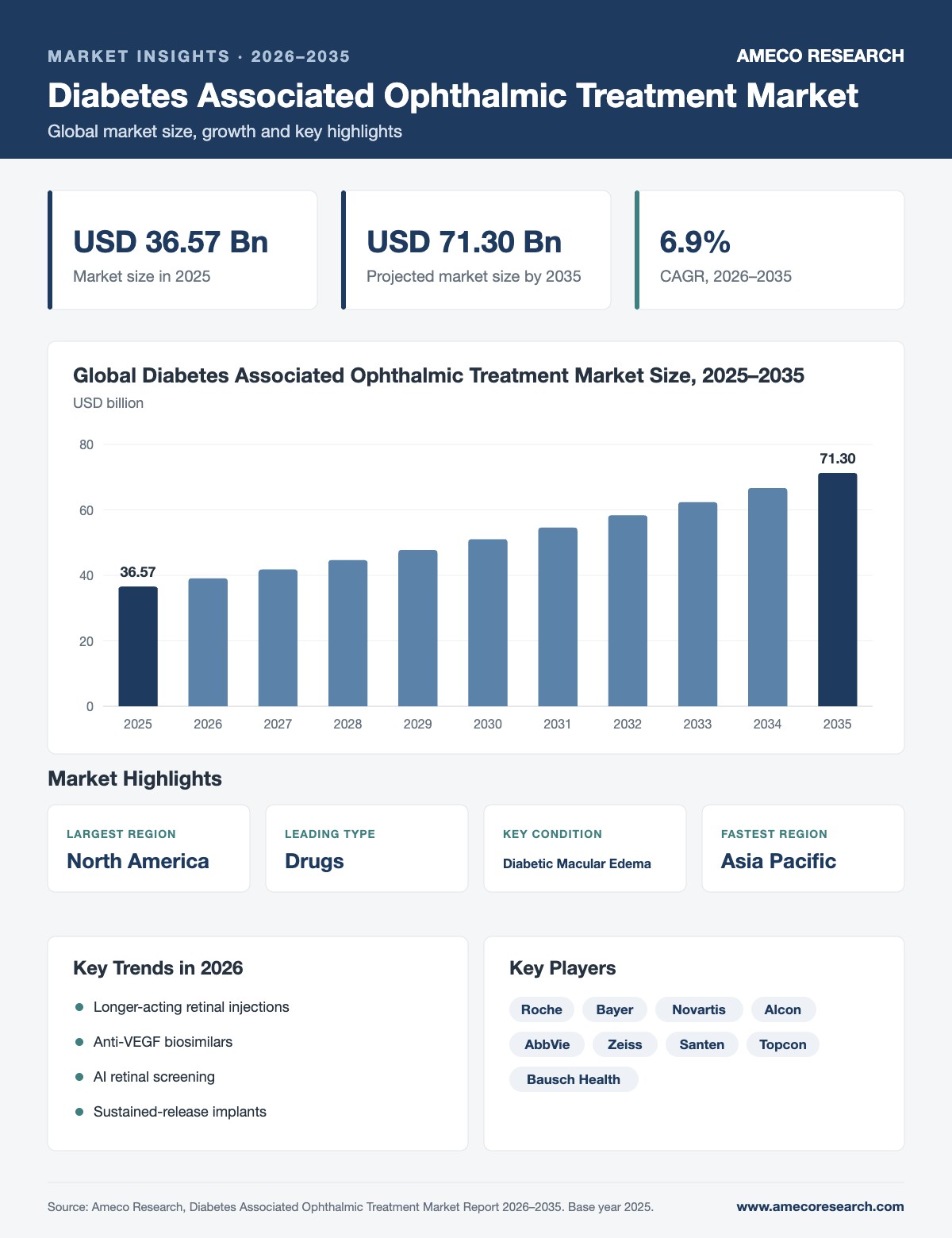 Infographic: Diabetes Associated Ophthalmic Treatment Market Size and Growth Opportunities and Forecast till 2026 - 2035 | Ameco Research
Diabetes Associated Ophthalmic Treatment Market Report Scope
| Report Attribute | Details |
| Diabetes Associated Ophthalmic Treatment Market Size in 2025 | USD 36.57 Billion |
| Diabetes Associated Ophthalmic Treatment Market Forecast by 2035 | USD 71.30 Billion |
| Diabetes Associated Ophthalmic Treatment Market CAGR (2026–2035) | 6.9% |
| Analysis Period | 2023–2035 |
| Base Year | 2025 |
| Forecast Period | 2026–2035 |
| Segments Covered | by Type, by Application, by End-User, and By Region |
| Regional Scope | North America, Europe, Asia Pacific, Latin America, and Middle East & Africa |
| Key Companies Profiled | Alcon, Abbott Medical Optics (Johnson & Johnson Vision), Allergan (AbbVie), Bayer AG, Bausch Health, Carl Zeiss Meditec, Ellex Medical Lasers Ltd., Genentech, Inc., F. Hoffmann-La Roche Ltd, IRIDEX Corp., Johnson & Johnson Services, Inc., Novartis AG, Lumenis, Pfizer, Inc., Santen Pharmaceutical Co. Ltd., Quantel, and Topcon Corp. |
| Report Coverage | Market Trends, Drivers, Restraints, Opportunities, Competitive Analysis, Player Profiling, Regulation Analysis |
Diabetes Associated Ophthalmic Treatment Market Size Forecast, 2023–2035
The table below shows the year-by-year size of the global diabetes associated ophthalmic treatment market. Revenue is expected to grow about 1.9 times between 2025 and 2035, reaching roughly USD 51.06 billion by 2030.
| Year | Market Size (USD Billion) |
| 2023 (historical) | 32.00 |
| 2024 (historical) | 34.21 |
| 2025 (base year) | 36.57 |
| 2026 (forecast) | 39.10 |
| 2027 (forecast) | 41.79 |
| 2028 (forecast) | 44.68 |
| 2029 (forecast) | 47.77 |
| 2030 (forecast) | 51.06 |
| 2031 (forecast) | 54.59 |
| 2032 (forecast) | 58.36 |
| 2033 (forecast) | 62.39 |
| 2034 (forecast) | 66.69 |
| 2035 (forecast) | 71.30 |
Latest Diabetes Associated Ophthalmic Treatment Market Trends (2026)
Longer-acting retinal injections
Newer therapies such as Roche's bispecific Vabysmo (faricimab) and high-dose aflibercept (Eylea HD) allow longer intervals between injections for DME and diabetic retinopathy, reducing treatment burden.
Anti-VEGF biosimilars
Biosimilars of ranibizumab and aflibercept are entering the US, European and Asian markets, lowering costs and widening access to treatment.
AI-based diabetic retinopathy screening
FDA-cleared autonomous AI systems and smartphone-based retinal cameras enable screening in primary care and pharmacies, helping detect disease earlier.
Sustained-release implants and gene therapy
Corticosteroid implants, port delivery systems and investigational gene therapies aim to provide months or years of treatment from a single procedure.
Cataract and glaucoma surgery
People with diabetes face higher rates of cataract and glaucoma, supporting demand for premium intraocular lenses and minimally invasive glaucoma surgery.
Teleophthalmology
Remote screening and monitoring programs extend eye care to underserved and rural populations with high diabetes rates.
Diabetes Associated Ophthalmic Treatment Market Dynamics
Growth drivers
- Rising global diabetes prevalence
- Aging populations
- New, longer-acting retinal therapies
- Screening programs and earlier diagnosis
- Growth of cataract and glaucoma procedures
Restraints and challenges
- High cost of biologic therapies
- Frequent injections and patient adherence challenges
- Limited access to eye specialists in low-income regions
- Reimbursement pressure
Opportunities
Key opportunities include biosimilars, longer-acting and oral therapies, AI screening in primary care, sustained-release delivery, gene therapy, and expanding diabetic eye care in Asia Pacific, Latin America and the Middle East.
Diabetes Associated Ophthalmic Treatment Market Segment Analysis
By type
The market is segmented into drugs and devices. Drugs hold the larger share, led by anti-VEGF and bispecific injections, while devices include lasers, surgical systems, intraocular lenses and imaging and screening equipment.
By application
Applications include diabetic retinopathy, diabetic macular edema, diabetic associated macular degeneration, cataracts, glaucoma, eye allergy and infection, uveitis and others. Diabetic macular edema and diabetic retinopathy are the largest therapeutic areas.
By end user
End users include hospitals, ambulatory surgical centers, ophthalmic clinics and others. Ophthalmic clinics and hospitals deliver most retinal injections, while ambulatory surgical centers perform a growing share of eye surgery.
Diabetes Associated Ophthalmic Treatment Market Regional Analysis
North America acquired the lion's share, supported by a large diabetic population, aging patients, established pharmaceutical and device players and demand for advanced care.
The Asia-Pacific market is anticipated to witness the fastest growth rate, driven by very high and rising diabetes prevalence in China and India and expanding eye care access. Europe is a major market with strong screening programs.
Latin America and the Middle East & Africa are growing markets with high diabetes rates, especially in the Gulf countries.
Diabetes Associated Ophthalmic Treatment Market Segmentation
Diabetes Associated Ophthalmic Treatment Market Leading Companies
The diabetes associated ophthalmic treatment market includes large pharmaceutical and biotech companies with retinal drugs, ophthalmic device makers, surgical and laser companies and diagnostic imaging firms. Companies compete on clinical efficacy, dosing intervals, safety, pricing, surgeon relationships and access programs. Key players profiled in this report include Alcon, Abbott Medical Optics (Johnson & Johnson Vision), Allergan (AbbVie), Bayer AG, Bausch Health, Carl Zeiss Meditec, Ellex Medical Lasers Ltd., Genentech, Inc., F. Hoffmann-La Roche Ltd, IRIDEX Corp., Johnson & Johnson Services, Inc., Novartis AG, Lumenis, Pfizer, Inc., Santen Pharmaceutical Co. Ltd., Quantel, and Topcon Corp..
AlconAbbott Medical Optics (Johnson & Johnson Vision)Allergan (AbbVie)Bayer AGBausch HealthCarl Zeiss MeditecEllex Medical Lasers Ltd.Genentech, Inc.F. Hoffmann-La Roche LtdIRIDEX Corp.Johnson & Johnson Services, Inc.Novartis AGLumenisPfizer, Inc.Santen Pharmaceutical Co. Ltd.QuantelTopcon Corp.
Key Questions Answered in This Report
- What is the size of the diabetes associated ophthalmic treatment market in 2025, and how large will it be by 2030 and 2035?
- What are the main growth drivers, restraints and opportunities through 2035?
- Which by type and by application segments will grow the fastest?
- Which regions and countries offer the largest and fastest-growing opportunities?
- How are longer-acting injections, biosimilars and AI screening shaping diabetic eye care in 2026?
- Who are the leading companies, and what strategies are they using to compete?
Research Methodology
Ameco Research built this forecast from a mix of primary and secondary research. Analysts spoke with ophthalmologists, pharmaceutical and device companies, hospitals and clinics, payers and patient groups to validate pricing, volumes and demand trends, and reviewed company filings, trade statistics, regulatory documents and industry publications. The diabetes associated ophthalmic treatment market size was estimated with bottom-up and top-down approaches and validated through data triangulation, with 2025 as the base year and forecasts for 2026–2035.
Related Reports
- Diabetes Drugs Market Report
- Veterinary Dermatology Drugs Market Report
- Alzheimer’s Disease Treatment Market Report
- Water Treatment Materials Market Report
- ENT Treatment Market Report
Diabetes Associated Ophthalmic Treatment Market: Frequently Asked Questions
How big is the diabetes associated ophthalmic treatment market?
The global diabetes associated ophthalmic treatment market was valued at USD 36.57 billion in 2025 and is expected to reach USD 71.30 billion by 2035.
What is the growth rate of the diabetes associated ophthalmic treatment market?
The diabetes associated ophthalmic treatment market is projected to grow at a CAGR of 6.9% from 2026 to 2035.
What will the diabetes associated ophthalmic treatment market be worth in 2030?
The diabetes associated ophthalmic treatment market is projected to reach about USD 51.06 billion in 2030, growing at a CAGR of 6.9%.
What is driving growth in the diabetes associated ophthalmic treatment market?
Key drivers are rising diabetes prevalence, aging populations, new longer-acting retinal therapies, screening programs and growth of cataract and glaucoma procedures.
What is diabetic eye disease?
Diabetic eye disease includes diabetic retinopathy, diabetic macular edema, cataracts and glaucoma, which are more common in people with diabetes and can lead to vision loss without treatment.
Which region leads the diabetes associated ophthalmic treatment market?
North America holds the lion's share, while Asia-Pacific is expected to grow fastest.
Which segment holds the largest share of the diabetes associated ophthalmic treatment market?
Drugs are the leading type, and diabetic macular edema and diabetic retinopathy are the largest therapeutic areas.
What are the latest trends in the diabetes associated ophthalmic treatment market?
The main 2026 trends are longer-acting retinal injections, anti-VEGF biosimilars, aI-based diabetic retinopathy screening, sustained-release implants and gene therapy, cataract and glaucoma surgery and teleophthalmology.
What are the main challenges in the diabetes associated ophthalmic treatment market?
The main challenges are the high cost of biologics, frequent injections, limited specialist access in some regions and reimbursement pressure.
How is diabetic macular edema treated?
Diabetic macular edema is mainly treated with anti-VEGF or bispecific eye injections, sometimes with corticosteroid implants or laser therapy, along with good blood sugar and blood pressure control.
Who are the key players in the diabetes associated ophthalmic treatment market?
Leading companies include Alcon, Abbott Medical Optics (Johnson & Johnson Vision), Allergan (AbbVie), Bayer AG, Bausch Health, Carl Zeiss Meditec, Ellex Medical Lasers Ltd., Genentech, Inc., F. Hoffmann-La Roche Ltd, IRIDEX Corp., Johnson & Johnson Services, Inc., Novartis AG, Lumenis, Pfizer, Inc., Santen Pharmaceutical Co. Ltd., Quantel, and Topcon Corp..